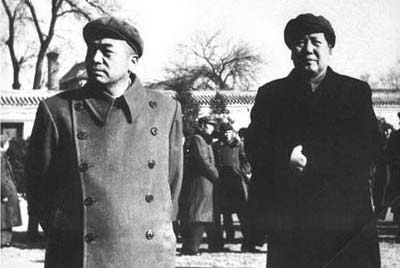
FULNESS AND DECAY

Alas for the fulness and decay of human greatness! Though these are called the appointments of Heaven, truly they are the handiwork of man.

It is written, "The proud shall suffer; the modest succeed." And so toil and anxiety may establish a kingdom; dissipation and ease will wreck a life. At the zenith of his fortune, among all the heroes of the age there could not be found his match. Yet when the tide turned, a few mummers dragged him to earth; the sceptre fell from his hand, and he perished, -- the laughing-stock of all.

Truly misfortunes oftimes spring from trivial and unexpected causes; and wisdom and courage are often marred by foibles other than a passion for theatrical display.


Comments

Popular posts from this blog

Nightsoil men

In Victorian time, building were often put up before water and sewage pipes were laid down so a single tap or pump might have to serve hundreds of people. Toilet waste was carried away by 'nightsoil men'.  Some seeped into the water supply and rivers became polluted by factory and human waste. In 1858, the Thames in London became so smelly that the year was known as 'the year of the Great Stink'!

The Indian Mutiny

British rulers were shaken to the core by the Indian Mutiny of 1857. The spark which lit the fuse of the rebellion was when cartridges were given to Indian troops which were coated in grease, made from cow or pig fat. These cartridges had to be prepared for firing by being bitten at one end. The cow is a sacred animal to the Hindus and the pig is regarded as unclean by Muslims, so no one was happy. Indian troops refused to bite the cartridges. Their British officers hanged a few. The troops rioted. They killed their officers, ransacked Delhi, and massacred British men, women and children. For a long time it looked as if the British might be defeated. The rebellion was about more than just biting cartridges. It was a revolt against taxation and the laws of the East India Company, which ruled India for Britain. After the mutiny, the British were a lot more careful about how they governed India. When the news of the mutiny reached England, crowds bayed for blood and Victoria was hor...

Panic or panick

There is only one spelling for panic ; the verb is inflected 'panic, panics, panicked, and panicking’. The form panick is used for progressive tense, past tense and past participle. We don't write panick today, though English speakers from a few hundred years ago might have (in the same way they might have written musick). When the alternate spelling “panick” is used for the past participle: "I panicked last night at the disco." When it’s use for progressive tense: “Invariably, when markets are panicking, they sell the stocks quickly.” It's the rule for root words ending in "c" is that you have to add “k”, so the spelling is related with the pronunciation. If we don't add the <k>, it looks as if the <c> has to be pronounced /s/. If the "k" was not there, “panicing” would look like the word which is supposed to be pronounced as if it is ended in "sing," while “paniced” would be pronounced like “panised”. The same ...