This is my notes, and would like to share with you. You may not come from a Christian country, and don't celebrate Christmas, but you might want to know some Christmas typical decorations and traditional British Christmas food.
From Charles Dickens' novel A Christmas Carol, we learn that the typical Christmas decoration plants are holly, mistletoe and ivy:
Mistletoe is actually a parasitic plant, found high in the trees. It doesn't take root in the ground, but in the branches of tree itself, and gets all its nutrients by taking them from the tree.
A longer list of Christmas food was described by Charles Dickens in the same book:
I had wrong impression that British people doesn't eat pig's head, tongue, tail or trotters, because I have only heard my friends saying that they saw pig's head sold in China Town food market, and it's very cheap, one or two pound a big head! You can't see a trace of these things in a butcher's shop, on the contrary you can buy in any butchers or Deli shop in China.
When I stayed in Belfast, I managed to procure a pig's head from meat supplier for a Chinese restaurant. That pig head was huge, but the problems was that we didn't have a stockpot to boil it, so at the end roasted it in oven.
Punch can be non-alcoholic and alcoholic drink, which was introduced from India to the United Kingdom in the early seventeenth century. Punch is served at parties in large, wide bowls, known as punch bowls.
From Charles Dickens' novel A Christmas Carol, we learn that the typical Christmas decoration plants are holly, mistletoe and ivy:
The walls and ceiling were so hung with living green, that it looked a perfect grove; from every part of which, bright gleaming berries glistened. The crisp leaves of holly, mistletoe, and ivy reflected back the light, as if so many little mirrors had been scattered there.Holly, mistletoe, pine and fir trees were quite logically celebrated in the winter because they bring color to a colorless landscape. Use these plants to decorate their home during winter festival might have been a Celtic tradition, which practiced by the Druidist.
 |
| Holly |
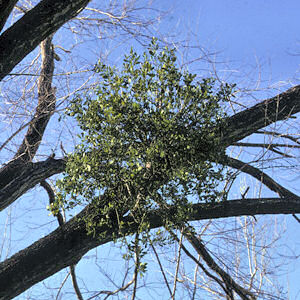 |
| Mistletoe |
Heaped up on the floor, to form a kind of throne, were turkeys, geese, game, poultry, brawn, great joints of meat, sucking-pigs, long wreaths of sausages, mince-pies, plum-puddings, barrels of oysters, red-hot chestnuts, cherry-cheeked apples, juicy oranges, luscious pears, immense twelfth-cakes, and seething bowls of punch, that made the chamber dim with their delicious steam.One of these delicious food might be not familiar to you, right, I mean the "brown". So what exactly is this? Well, actually these brawn is made from pig's head, trotters, herbs and spices. Here is the James Martin's magnificent brawn made with British brawn recipes.
I had wrong impression that British people doesn't eat pig's head, tongue, tail or trotters, because I have only heard my friends saying that they saw pig's head sold in China Town food market, and it's very cheap, one or two pound a big head! You can't see a trace of these things in a butcher's shop, on the contrary you can buy in any butchers or Deli shop in China.
When I stayed in Belfast, I managed to procure a pig's head from meat supplier for a Chinese restaurant. That pig head was huge, but the problems was that we didn't have a stockpot to boil it, so at the end roasted it in oven.
Punch can be non-alcoholic and alcoholic drink, which was introduced from India to the United Kingdom in the early seventeenth century. Punch is served at parties in large, wide bowls, known as punch bowls.
Comments
Post a Comment