When I read Derbyshire Villages, I noticed that in many chapters the author mentioned a book Domesday Book, sounds like "doomsday book". I just wondered what the book looks like, was that a book which recorded church building (domes of churches) by Christian monks?
Of course not, the Domesday Book is a great land survey from 1086, commissioned by William the Conqueror to assess the extent of the land and resources being owned in England at the time.
Well, I was not totally wrong about the book name. An observer of the survey wrote, "there was no single hide nor a yard of land, nor indeed one ox nor one cow nor one pig which was left out", the grand and comprehensive scale of the survey and the irriversible nature of the information collected led people to compare it to the Last Judgement, or 'Doomsday', described in the Bible.
This book also showed the dvastation caused by the war led by William the Conqueror as village after village appears with the word wasta, meaning "wasted", next to it.
Domes Day Book Online is a website dedicated to this book, this site may help you discover the history of the Domesday Book, to give an insight into life at the time of its compilation, and provide information and links on related topics.
You also can get your town's Domesday Book entries, 6-page Domesday book extract, includes translation and glossary through this website.
[caption id="" align="alignnone" width="232" caption="Doomsday Book and chest at National Archive"]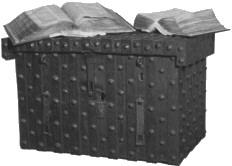 [/caption]
Of course not, the Domesday Book is a great land survey from 1086, commissioned by William the Conqueror to assess the extent of the land and resources being owned in England at the time.
Well, I was not totally wrong about the book name. An observer of the survey wrote, "there was no single hide nor a yard of land, nor indeed one ox nor one cow nor one pig which was left out", the grand and comprehensive scale of the survey and the irriversible nature of the information collected led people to compare it to the Last Judgement, or 'Doomsday', described in the Bible.
This book also showed the dvastation caused by the war led by William the Conqueror as village after village appears with the word wasta, meaning "wasted", next to it.
Domes Day Book Online is a website dedicated to this book, this site may help you discover the history of the Domesday Book, to give an insight into life at the time of its compilation, and provide information and links on related topics.
You also can get your town's Domesday Book entries, 6-page Domesday book extract, includes translation and glossary through this website.
[caption id="" align="alignnone" width="232" caption="Doomsday Book and chest at National Archive"]
[/caption]
Comments
Post a Comment